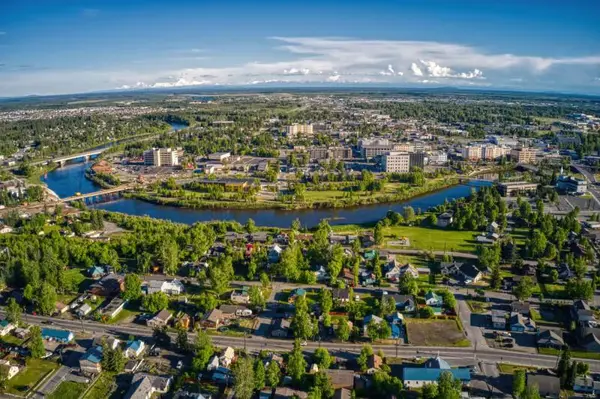
Buying Land in Fairbanks and North Pole
Buying Land in Fairbanks and North Pole: What the Market Data Actually Shows
The land market in Interior Alaska runs by different rules than the housing market, and the MLS data proves it. In the first half of 2026, homes across the Greater Fairbanks MLS sold in a median of about eight days at nearly 99% of asking price. Land told the opposite story: 95 land sales closed at a median price of $40,000, but sellers averaged just 89.8% of asking, with a median of 53 days on market and an average stretching to 138 days. Same region, same MLS, completely different market. If you are buying land here — for a future build, recreation, or investment — that difference is your leverage. Here is how to use it, and what to check before you do.
Why land trades differently
Houses in this market have urgent buyers: families relocating, PCS orders, leases ending. Land has patient ones. Nobody has to buy a specific parcel by a specific date, financing is harder than for homes, and every parcel is genuinely unique — which means price discovery is slow and negotiation is real. A ten-percent-plus average gap between asking and selling price simply does not exist on the housing side of this market. On land, it is the norm. Sellers know their parcel may take months to move; serious, prepared buyers can negotiate accordingly.
The questions that decide whether a parcel is buildable
The $40,000 median hides an enormous quality range, because in Interior Alaska the value of land is mostly about what is underneath and around it.
Soils and permafrost. This is the region-defining question. Permafrost-affected ground constrains foundation options and drives building costs; well-drained soils on south-facing slopes are the local gold standard. Ask whether soils testing has been done, and budget for it if not — it is the single most consequential piece of due diligence on Interior land.
Access, legal and physical. Confirm recorded legal access, not just an existing trail. Ask who maintains the road, what it costs, and whether it is passable in breakup and midwinter. A parcel with seasonal access is a different product than one on a maintained road.
Power. Distance to existing electric service can add substantial cost to a build. Get an actual answer from the utility on line extension before assuming.
Water and septic feasibility. Most rural parcels here will rely on a well and septic. Soils and site conditions determine septic feasibility; neighboring wells give evidence on water depth and quality, including arsenic, which is documented in parts of Interior Alaska groundwater.
Zoning, easements, and flood considerations. Much of the borough is lightly zoned, but easements, setbacks, wetlands, and floodplain mapping still apply parcel by parcel. Title work and the borough's records answer most of it.
Financing land is its own subject
Vacant land typically cannot be financed like a house. Expect land loans to involve larger down payments and shorter terms than mortgages, with terms varying meaningfully by lender; owner financing also appears in this market more often on land than on homes. If the plan is to build, construction-to-permanent financing may cover the land purchase as part of the project. Talk to a lender about the land itself before falling in love with a parcel.
The honest investment picture
Land here is a patience asset in both directions. The same data that gives buyers negotiating room — long marketing times, sub-90% sale-to-list ratios — applies when you eventually sell. Carrying costs are low (borough property taxes on raw land are modest relative to improved property), but liquidity is limited, and appreciation depends heavily on parcel quality and location rather than market-wide tides. Buy land you would be content to hold, on terms the data says you can negotiate.
Fairbanks Land Buying FAQ
How much does land cost in the Fairbanks area? The median MLS land sale in the first half of 2026 was $40,000, with wide variation by size, access, soils, and location. Sellers averaged 89.8% of asking price.
How long does land take to sell in Fairbanks? Median 53 days on market for sold parcels in the first half of 2026, with the average at 138 days — far slower than homes, which is negotiating leverage for buyers.
What is the biggest risk buying land in Interior Alaska? Soils and permafrost. Ground conditions determine whether and how a parcel can be built on, and what the foundation will cost. Soils evaluation is essential due diligence.
Can I get a loan for vacant land? Yes, but land loans typically carry larger down payments and shorter terms than home mortgages, and terms vary by lender. Owner financing is also relatively common on land in this market.
Market figures from Greater Fairbanks Board of Realtors MLS, land (LD) class sold statistics, January 1 – June 30, 2026. This post is general information — soils, access, utilities, and title must be verified parcel by parcel with qualified professionals.
Categories
Recent Posts